

-
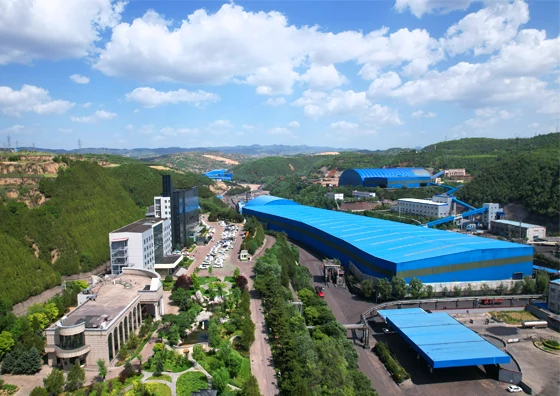
InformationThe company's main businesses are coal, coking, and education, and it also operates international trade, logistics, chemicals, power generation, heating and other supporting auxiliary industries, forming an integrated development of coal-coking-chemicals and coal-electricity. industrial chain.

-
Industry"Datuhe Brand" first-grade metallurgical coke is our pillar product and enjoys a high reputation in domestic and foreign markets.

-
-
Party workerDon’t forget your original intention, and it will become stronger over time. If you are harmonious, you will be on the right path. Datu River will play a positive role in promoting the stability of social order, improvement of people's living standards and harmonious social development in Lishi District.
-



District Mayor Zhang Haiwen and his delegation visited our company to oversee workplace safety.
2026-06-09 00:00:00
On the afternoon of June 8, Zhang Haiwen, Deputy Secretary of the District Party Committee and District Mayor, led a delegation—including Xue Jun, Director of the District Government Office, and Chen Nan, Director of the District Emergency Management Bureau—to our company for a special meeting on work safety and to conduct on-site supervision of safety‑production efforts. Attending the meeting were Jia Tingliang, the company’s Chief Advisor; Jia Guoping, Chairman of the Board; Zhao Kanghong, General Manager; the mine managers and deputy mine-level leaders; heads of second‑level units; and departmental directors and above. The meeting was chaired by Li Chengyun, the company’s Deputy General Manager for Production.
The meeting comprehensively conveyed the core principles and requirements of recent provincial, municipal, and district-level work conferences on workplace safety. In conjunction with the Lishi District’s list of safety production responsibilities, it focused on key areas of safety management in the coal mining sector, refining specific measures, clarifying performance standards, and ensuring that responsibilities are firmly assigned and implemented.
District Chief Zhang Haiwen emphasized the need to accurately assess the complex and grave current situation in coal‑mine safety production, deeply recognize the industry’s hallmark traits—namely, the suddenness, concealment, and extreme harm of coal‑mine accidents—and comprehensively align with and implement all decisions and arrangements adopted at the provincial, municipal, and district‑level special meetings on coal‑mine safety. He underscored that the principle of “putting the people first and life above all else” must remain the fundamental guiding principle for safety work, while steadfastly pursuing source‑level prevention, process‑oriented control, and closed‑loop rectification. It is imperative to address shortcomings across all links—underground operations, personnel management, emergency preparedness, and hazard identification—thereby strengthening the entire coal‑mine safety‑control network and resolutely safeguarding the bottom line of preventing any safety incidents. Furthermore, it is essential to ensure that both thinking and action are fully aligned with the decisions and deployments of the provincial, municipal, and district committees on safety production; rigorously benchmark against the Lishi District’s Safety Production Responsibility List, systematically matching each item and ensuring its thorough implementation, and advance all safety measures with stringent standards and concrete actions.
District Chief Zhang Haiwen emphasized that the essence of workplace safety lies in people, and the key is also people; ultimately, all safety risk prevention and control must be anchored in managing personnel’s mindset, behavior, and performance of duties. All management personnel must firmly cultivate a sense of responsibility—“never feeling fully at ease”—and integrate safety management into every routine operational step, including mining and excavation, maintenance, inspections, shift handovers, and pre-shift meetings. Regular, organization-wide safety awareness campaigns and hands-on job‑specific training should be conducted to standardize frontline workers’ operating procedures, thereby establishing a robust, enterprise‑wide safety safeguard at the root level. Through consistent, meticulous on-site management, we will ensure stable and orderly safe production at the mine and promote the company’s steady, healthy development.
District Chief Zhang Haiwen emphasized the need to transcend the narrow perspective of individual enterprises and, from the vantage point of the district’s overall economic and social development, strategically plan and advance workplace safety efforts. He underscored the dialectical relationship between safety as the prerequisite for development and development as the safeguard for safety. It is imperative to recognize clearly that safety constitutes the red line, the bottom line, and the lifeline of all production and business activities. Enterprises must rigorously enforce their primary responsibility for workplace safety, clearly delineate safety-related powers and duties at all levels, and ensure effective accountability down to the “last mile.” Within each enterprise, all departments and positions must coordinate and work in concert, pooling collective strength to prioritize and manage safety across the board. On the basis of firmly upholding the safety baseline, enterprises should strive to enhance quality and efficiency while pursuing steady growth, earnestly fulfill their corporate social responsibilities, and wholeheartedly promote the safe, rapid, healthy, and sustainable development of coal mining operations—thereby contributing their full measure to the high‑quality economic and social development of Lishi District and to the broader goals of safety and stability.
Chen Nan, Director of the District Emergency Management Bureau, stated that the coal industry is currently undergoing a profound restructuring, and the development landscape is becoming increasingly challenging. All personnel must reassess safety work, carefully balancing the human‑life, political, and economic dimensions, and always prioritize the safety of workers. They should closely monitor unsafe behaviors and unsafe conditions, conduct thorough inspections to identify management gaps and environmental hazards, and ensure that all safety responsibilities are firmly in place. It is essential to strengthen accountability for safety, rigorously verifying whether systems are sound, measures are effective, implementation is on track, and results meet established standards. Compliance with regulatory procedures must be strictly upheld; job responsibilities should be clearly defined, a comprehensive system of individual post‑responsibility be fully implemented, and the “Three Controls, Three Musts” principle be strictly observed—ensuring that safety is managed alongside every line of business. Furthermore, we must deepen our understanding of workplace safety and proactively address all types of risks and challenges. Risk identification efforts must be strengthened, and geological conditions should be made fully transparent. A stringent regulatory approach is required to safeguard the safety baseline. Each mine should organize benchmarking studies, foster mutual learning and knowledge sharing, and address existing shortcomings, thereby fortifying the safety defense and contributing, through concrete actions and tangible results, to the steady and positive economic development of the entire district.
Previous Page:
Expand reading



Shanxi Datuhe Coking Co., Ltd.
Contact Us
Contact Phone:0358-3364281
Enterprise E-mail:dthjhgsxzb@163.com
Enterprise address: Datuhe Village, lishi district, Luliang City, Shanxi Province
WeChat Public Number