

-
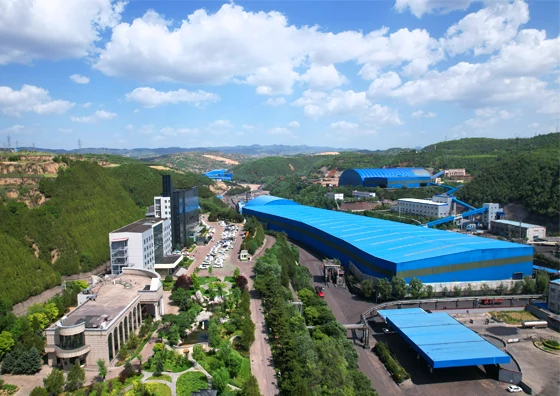
InformationThe company's main businesses are coal, coking, and education, and it also operates international trade, logistics, chemicals, power generation, heating and other supporting auxiliary industries, forming an integrated development of coal-coking-chemicals and coal-electricity. industrial chain.

-
Industry"Datuhe Brand" first-grade metallurgical coke is our pillar product and enjoys a high reputation in domestic and foreign markets.

-
-
Party workerDon’t forget your original intention, and it will become stronger over time. If you are harmonious, you will be on the right path. Datu River will play a positive role in promoting the stability of social order, improvement of people's living standards and harmonious social development in Lishi District.
-



The District Emergency Management Bureau conducted safety assistance activities at the Mechanical Repair Company.
2026-07-02 11:25:36
In accordance with the 2026 work plan for supporting benchmark enterprises in key industrial and commercial sectors, as well as the established implementation scheme, staff from the Metallurgy and Industrial & Commercial Division and the Enforcement Team of the Lishi District Emergency Management Bureau participated throughout the entire supervision process. The assistance team successively conducted on-site inspections and provided guidance to five enterprises: Lüliang Jinshengli Machinery Manufacturing Co., Ltd., Lüliang Lishi District Jingcheng Machinery Casting Co., Ltd., Shanxi Xinlong Heavy Industry Polymer Technology Co., Ltd., Shanxi Lishi Cable Co., Ltd., and Shanxi Zhongci Shangshan Technology Co., Ltd. The final stop of this assistance tour was at a machine‑repair company, where all personnel carried out on‑site inspections, engaged in benchmark‑based exchanges, and convened the concluding meeting of the support initiative.
As the benchmark unit for this assistance initiative, the Mechanical Repair Company’s dedicated task force provided end-to-end coordination of the entire support effort. During the on-site inspection phase, supervisors, the assistance team, and safety management personnel from each enterprise jointly conducted a comprehensive review—aligned with safety management standards and industry-specific regulations—of the company’s high-risk operations, equipment and facilities, safety records, and emergency response systems. In the subsequent exchange and discussion session, staff reiterated key regulatory requirements, drawing on documents such as the “Criteria for Identifying Major Accident Hazards in Industrial and Commercial Enterprises” and the “Safety Regulations for Confined Space Operations.” They also leveraged findings from this round of enterprise-wide inspections, along with typical accident cases from the mechanical casting sector—such as molten metal splashing, gas leaks, and poisoning incidents during confined space work—to deliver targeted safety awareness and education, thereby further reinforcing a robust safety‑first mindset across the organization.
Focusing on the common challenges in industrial safety management, participants engaged in in-depth discussions on topics including protective measures for high‑temperature molten metal operations, standardized cylinder management, and end-to-end control of special operations such as hot work, working at heights, and temporary electrical use, as well as the establishment of safety records and the management of emergency response supplies. The mechanical repair company shared its proven, hands-on experience in on-site safety oversight, equipment maintenance and operation, and closed-loop hazard remediation, and provided clear answers to the recurring issues identified during this round of inspections, as well as to the managerial dilemmas faced by various enterprises.
At the closing meeting, Captain Feng Zhiqiang of the District Emergency Management Bureau’s Enforcement Team and Section Chief Zhao Xiaofeng of the Metallurgy and Industrial Trade Section provided feedback and guidance on the progress of the earlier on-site assistance and hazard‑identification efforts. The assistance working group conducted a comprehensive review of the overall implementation of this round of support, collated and summarized the hazards identified at each enterprise, and reiterated the requirements for the four phases of the initiative. To date, the initial stages—on‑site inspections of individual enterprises and on‑site reviews of benchmark companies—have been fully completed. The next phase will officially transition to hazard rectification, follow‑up verification of corrective actions, and final reporting. The working group will continue to monitor progress, conduct targeted supervisory reviews at each enterprise, assist organizations in refining their work‑safety management systems and optimizing emergency response plans, strive to achieve dynamic zero tolerance for major hazards, and strengthen long‑term safety‑management mechanisms.
During the final-stage on-site inspection and the closing meeting, the outcomes of the assistance efforts were comprehensively reviewed, and existing shortcomings were identified, thereby clarifying the direction for subsequent corrective actions. Moving forward, the machinery repair company’s assistance task force will remain firmly problem‑oriented, closely monitor the effectiveness of remediation, and ensure that all measures are fully implemented. Meanwhile, each enterprise will address the issues listed one by one, proactively draw on the best management practices of benchmark companies, strengthen weak areas in safety management, and work together to steadily elevate the overall level of workplace safety across the industrial and commercial sectors in Lishi District.
Previous Page:
Expand reading



Shanxi Datuhe Coking Co., Ltd.
Contact Us
Contact Phone:0358-3364281
Enterprise E-mail:dthjhgsxzb@163.com
Enterprise address: Datuhe Village, lishi district, Luliang City, Shanxi Province
WeChat Public Number