

-
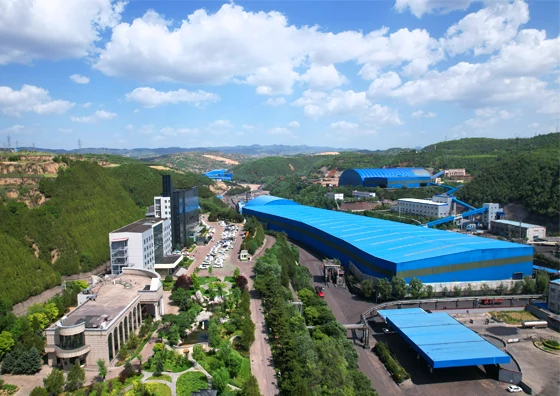
InformationThe company's main businesses are coal, coking, and education, and it also operates international trade, logistics, chemicals, power generation, heating and other supporting auxiliary industries, forming an integrated development of coal-coking-chemicals and coal-electricity. industrial chain.

-
Industry"Datuhe Brand" first-grade metallurgical coke is our pillar product and enjoys a high reputation in domestic and foreign markets.

-
-
Party workerDon’t forget your original intention, and it will become stronger over time. If you are harmonious, you will be on the right path. Datu River will play a positive role in promoting the stability of social order, improvement of people's living standards and harmonious social development in Lishi District.
-



Ten-Kilometer Hike Strengthens Body and Spirit; Extreme-Condition Preparations Safeguard the Minefield
2026-04-30 16:22:46
The mine rescue team is the “guardian of life” in underground mines. Confronted with complex and ever‑changing geological conditions, narrow, dimly lit tunnels, the constant threat of toxic and harmful gases, and the risk of collapses and roof falls, robust physical fitness is the foundation for carrying out rescue operations. And ten‑kilometer foot marches have become their daily, unwavering mandatory training.
As soon as the sun rises each day, the mine rescue team members don their heavy rescue gear and embark on their monthly routine 10,000-meter training march. Unlike ordinary hiking, their entire exercise is conducted under simulated real‑world conditions: they wear miner’s lamps, carry four‑hour oxygen respirators, and strap on self‑rescuers, gas detectors, first‑aid kits, manual breaching tools, and other specialized equipment—totaling a load of more than fifteen kilograms. The course deliberately follows rugged, uneven terrain—recreating underground tunnels, muddy slopes, and steep stairways—to closely replicate the complex conditions found deep underground. Every step forward demands overcoming both the weight of their gear and the resistance of the challenging landscape.
Throughout the march, the team maintained a neat formation, with steady, powerful strides and resounding, clear‑voiced chants. Though the ten‑kilometer route seemed long, it was broken down into a series of realistic training checkpoints: along the way, simulated emergencies—such as collapsed alleyways, trapped personnel, and gas leaks—were randomly introduced. The team members immediately halted, swiftly donned protective gear, measured gas concentrations, constructed temporary rescue passages, and carried simulated casualties. Each step was executed smoothly and expertly, never faltering despite the physical toll. Prolonged marching under heavy loads soon left their uniforms drenched in sweat, clinging to their backs; beads of perspiration trickled down their cheeks, their legs grew achy and numb, and blisters on their feet became an almost daily occurrence. Yet not a single member gave up; they gritted their teeth and pressed on, steadily advancing toward the finish line.
Ten‑kilometer training is not only an ultimate test of physical fitness but also a rigorous refinement of willpower. In underground rescue operations, teams often must hike for extended periods through intricate tunnels; without adequate stamina, they cannot reach the scene, let alone assist those in need. Daily ten‑kilometer marches enable team members to build endurance, explosive power, and bodily coordination through repeated practice, while also mastering the proper donning and use of various rescue gear and cultivating teamwork and emergency‑response skills. Regardless of scorching heat, bitter cold, wind, or rain, this training never ceases. With steadfast determination, step by step, the team pushes their physical limits and hones their skills to perfection—so that, at the very first sign of danger in a mine, they can descend into the shaft with maximum speed and do everything possible to give trapped miners every chance of survival.

Previous Page:
Expand reading



Shanxi Datuhe Coking Co., Ltd.
Contact Us
Contact Phone:0358-3364281
Enterprise E-mail:dthjhgsxzb@163.com
Enterprise address: Datuhe Village, lishi district, Luliang City, Shanxi Province
WeChat Public Number